
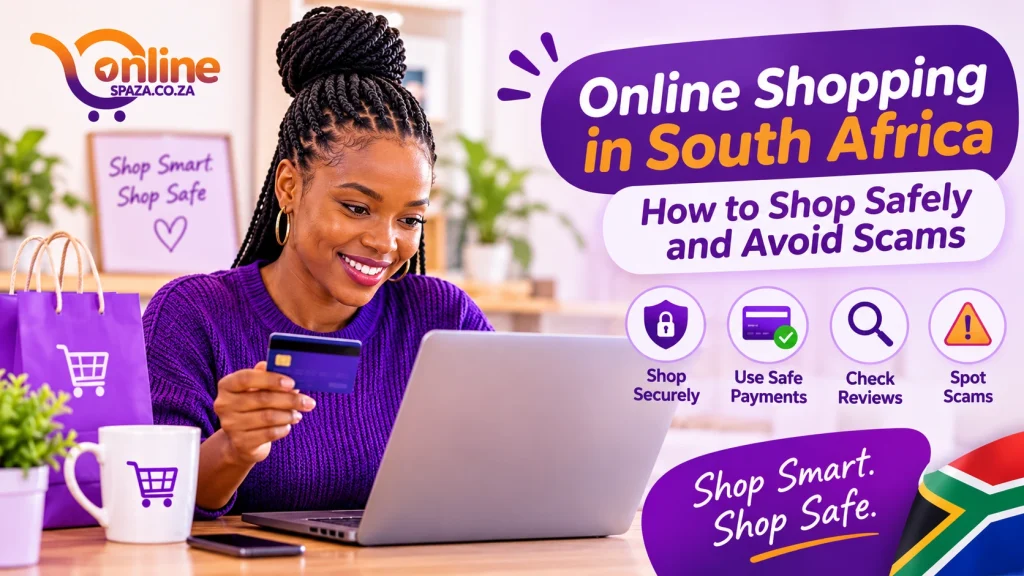
Online shopping has made life a little more convenient for South Africans. You can browse products, compare prices and place an order without leaving the comfort of your home.
But there’s a downside: online scams are a real concern. Fake online stores, suspicious payment requests and fraudulent delivery messages can leave shoppers out of pocket and put their personal information at risk.
The good news is that safe online shopping in South Africa starts with a few simple precautions. Knowing how to identify a legitimate store, recognise warning signs and protect your payment details can help you shop with greater confidence.
Whether you’re shopping online for the first time or already regularly ordering products from your phone, here are 10 practical tips to help you shop safely.
1. Check whether the online store is legitimate
Before adding anything to your basket, take a moment to check who you’re buying from.
A professional-looking website is a good start, but it doesn’t automatically mean the business is trustworthy. Fraudulent stores can copy the branding, product images and even the wording of legitimate retailers.
Look for signs that the business is genuine, including:
- An About Us page: Does it explain who the business is and what it sells?
- Working contact details: Look for an email address, telephone number or WhatsApp contact where appropriate.
- Clear delivery and returns policies: You should be able to understand how orders are delivered and what happens if something goes wrong.
- Consistent business information: Check whether the business name and contact details are consistent across its website and other official channels.
- A credible online presence: Search for the business independently and look for evidence of genuine customer interactions.
Be cautious if the website contains contradictory information, copied content, broken pages or contact details that don’t work.
At Online Spaza, you can familiarise yourself with the business by visiting our About Us page and reviewing our Shipping Policy and Returns Policy before placing an order.
2. Make sure the website connection is secure
Before entering your personal or payment information, check the website address.
A web address beginning with ‘https://’ and a padlock symbol in your browser indicates that the connection is encrypted. This helps protect information transmitted between your browser and the website.
However, there’s an important distinction: HTTPS doesn’t prove that a business is legitimate. Scam websites can also use encrypted connections.
Check the domain name carefully for misspellings, unusual additions or addresses that imitate well-known brands. If you arrived through an advert, email or SMS, consider navigating to the retailer’s official website directly instead.
If a website looks suspicious or your browser displays a security warning, don’t proceed with a purchase until you’ve established that it’s safe.
3. Be suspicious of deals that seem too good to be true
Everyone loves a bargain, especially when household expenses are adding up. But an unbelievably low price can sometimes be a warning sign.
Scammers may advertise popular electronics, branded clothing, fragrances or other sought-after products at prices far below those offered by established retailers.
Before making a purchase, compare the price with a few reputable stores. Check the product description, seller details and any additional delivery charges.
Ask yourself:
- Is the discount unusually large?
- Does the seller provide a believable explanation for the price?
- Are the product details clear and consistent?
- Is there pressure to pay immediately to secure the deal?
A genuine special is possible, but you shouldn’t have to ignore obvious warning signs to take advantage of one.
Remember, losing money to a fraudulent seller is far more expensive than missing a bargain.
4. Choose secure payment methods
How you pay can make a difference if something goes wrong.
Where possible, use a recognised payment gateway or another established payment service that offers appropriate security measures and clear dispute procedures.
Before confirming payment, check that the amount is correct and that you’re paying the intended business.
Be especially cautious if a seller asks you to transfer money into an unrelated personal account, pay through an unfamiliar service or change payment methods at the last minute.
A few additional precautions can help:
- Never send your card details through an ordinary email or an unsolicited message.
- Don’t save your payment details on unfamiliar websites.
- Check transaction notifications from your bank.
- Review the payment provider’s terms to understand what protection may be available.
Keep in mind that no payment method guarantees that you’ll recover your money. The available protection depends on the payment method, provider and circumstances of the transaction.
5. Never share your PIN, OTP or banking password
Your banking information is private, and you should treat it that way.
Fraudsters may pretend to be a retailer, bank employee or delivery company and claim they need to verify your identity or release a parcel.
They might ask for a one-time PIN (OTP), card PIN, online banking password or other confidential information.
Don’t provide it.
Legitimate payment processes may require you to authenticate a transaction through your bank or payment provider, but you should only do so through the genuine, secure process you initiated. Never disclose your banking PIN or password to a person over the phone or through a message.
If someone unexpectedly contacts you asking for confidential banking details, stop communicating and verify the request using your bank’s official contact channels.
If you’ve already shared sensitive information, contact your bank immediately and follow its instructions to secure your account.
6. Watch out for phishing emails and SMSes
Have you ever received an SMS claiming that your parcel is waiting for delivery, only for the message to demand an unexpected fee?
Or perhaps you’ve received an email warning that your account will be suspended unless you click a link immediately.
These messages may be attempts at phishing: a form of fraud in which criminals impersonate legitimate organisations to trick people into sharing information or making payments.
Scammers may imitate banks, courier companies, online stores and payment providers.
Watch for warning signs such as:
- Unexpected requests for delivery or customs payments.
- Links leading to unfamiliar or misspelled domains.
- Messages creating urgency or threatening immediate consequences.
- Requests to confirm passwords, banking details or OTPs.
- Sender addresses that don’t match the organisation being impersonated.
Don’t click suspicious links or open unexpected attachments. Instead, visit the company’s official website directly or contact it through a verified channel.
If a courier genuinely needs to contact you about a delivery, you should be able to verify the information independently.
7. Read customer reviews and research the business
Before ordering from an unfamiliar online store, spend a few minutes researching it.
Search the business name alongside terms such as “reviews”, “complaints” or “scam”. Look at independent review platforms and the company’s established social media profiles, where available.
Pay attention to patterns rather than relying on one review.
For example, repeated complaints about missing parcels, unresponsive customer service or unexpected payment requests deserve attention.
Also be cautious of reviews that appear suspiciously similar, excessively promotional or posted within a very short period. Reviews can be fabricated, so a high rating alone isn’t proof that a retailer is trustworthy.
A new business isn’t automatically fraudulent, either. The important thing is to assess the available evidence, check its contact details and understand its policies before paying.
8. Understand delivery, returns and your consumer rights
Before placing an order, make sure you understand what happens after you pay.
A trustworthy online shopping experience should provide clear information about delivery charges, estimated delivery times, returns and how to report a problem.
Check the following before completing your purchase:
- How much delivery costs.
- Whether delivery is available to your area.
- How long the order is expected to take.
- What to do if your parcel arrives damaged or contains the wrong item.
- How to request a return, refund or replacement.
- Whether any product-specific exclusions apply.
What are your rights when shopping online in South Africa?
South African consumers have protections under legislation including the Consumer Protection Act 68 of 2008 (CPA) and, where applicable, the Electronic Communications and Transactions Act 25 of 2002 (ECTA).
These laws address different aspects of consumer transactions, including defective goods, misleading marketing and certain electronic transactions.
For example, the CPA provides remedies in qualifying circumstances when goods fail to meet required standards. ECTA also provides a cooling-off right for certain transactions concluded through electronic channels, subject to statutory conditions and exclusions.
However, not every online purchase automatically qualifies for a return simply because you change your mind. The applicable rights depend on the transaction, the reason for the return and the relevant legal provisions.
Read the retailer’s policies carefully, keep your order confirmation and payment records, and consult the relevant legislation or a consumer advice service if you need clarification about your specific circumstances.
At Online Spaza, you can review our Shipping Policy and Returns Policy to understand our ordering and after-sales processes.
9. Keep your order confirmations and payment records
Once you’ve placed an order, don’t delete the confirmation email or discard the details.
Keep a record of:
- Your order number and confirmation.
- The product description and advertised price.
- Your payment confirmation or receipt.
- Delivery and tracking information.
- Relevant messages exchanged with the seller.
- Any return or refund requests.
These records make it easier to follow up if your order is delayed, an item arrives incorrectly or you need to query a transaction.
If a dispute arises, having the original information available can also help when communicating with the retailer, payment provider or bank.
It’s a small habit that can save you a lot of frustration later.
10. Trust your instincts and don’t let anyone rush you
One of the biggest warning signs of a potential scam is pressure.
A seller may insist that you pay immediately, threaten to cancel a deal within minutes or refuse to answer reasonable questions about the product or business.
You might also notice inconsistent contact details, vague delivery promises or requests to move the conversation to an unusual payment channel.
Don’t let the fear of missing out cloud your judgement.
Take your time, verify the details and walk away if something doesn’t add up. A genuine bargain isn’t worth putting your money or personal information at unnecessary risk.
If you’ve already made a payment and suspect fraud, contact your bank or payment provider immediately. Report the incident to the relevant authorities and preserve all messages and transaction records.
Acting quickly may help limit further losses, although recovery isn’t guaranteed.
Final Thoughts: Shop Online with Greater Confidence
Online shopping can make everyday life easier, whether you’re buying groceries, restocking household essentials, treating yourself to a new fragrance or finding a gift for someone special.
The key is to make informed decisions before you pay.
Check the retailer, verify the website address, use secure payment methods, protect your banking information and understand the delivery and returns policies. Most importantly, don’t allow pressure or an unbelievable discount to override your judgement.
You don’t need to be a cybersecurity expert to shop more safely. A few sensible checks can help you make better decisions and avoid many common scams.
Ready to shop online?
Explore the Online Spaza shop to browse groceries, beauty products, fashion, kitchenware and household essentials.
For added peace of mind, familiarise yourself with our About Us, Shipping Policy and Returns Policy pages before placing your order.